Musique - Music
Architecture
The Apple House
History
Alfonso XIII, King of Spain
Valencia
My favorite neighborhood of Valencia
Musique - Music
The Big Band Era
Food & Beverages
Les différents types de truffes
Cars
Ford Escort Mk1 RS
Musique - Music
Luciano Pavarotti sings "Non ti scordar di me"
Musique - Music
Henry Mancini
Livres - Books
The Americans (1958)
Food & Beverages
Caffè Borbone
Mode et Vêtements
Tom Ford Joey 02
Arts et Mouvements
Ballerinas In The Dressing Room (1923)
Arts et Mouvements
Self-portrait at the Dressing Table (1909)
Grandeur de la France
La Compagnie Générale Transatlantique
Photographs
Life Inside Hong Kong’s ‘Coffin Cubicles’
Philosophy & Concepts
The Halo Effect
Philosophy & Concepts
Le Panache
La beauté du geste gratuit et stylé, même dans la défaite
Citations - Quotes
Quod tango muto
Ce que je touche, je le change
Mode et Vêtements
André Courrèges
Video Creation
Let AI agents compose videos
Livres - Books
Le Savoir-vivre du XXIe siècle
Télévision
Le carré blanc à la télévision
1990s - 2000s
Nous Ç Nous
Food & Beverages
Classification officielle des vins de Bordeaux de 1855
NYC
Find NYC Upcoming Public Events
Apple
All About Steve Jobs
Découvertes - Discoveries
Les regrattiers
Arts et Mouvements
Le jardin d'essai du Hamma (1881)
Arts et Mouvements
Bal du moulin de la Galette (1876)
Parfums et Odeurs
Pot Pourri
Mode et Vêtements
Dr Denis Bruna
Mode et Vêtements
ENFANTS RICHES DÉPRIMÉS
Mode et Vêtements
La Mouche
Life Strengthening
Le Tai Chi
Mode et Vêtements
La Grande Fabrique de Lyon au service de l’Empire
Découvertes - Discoveries
Poivre, paiement en espèces et colons
Arts et Mouvements
La baie d’Alger (1881)
Arts et Mouvements
Orientalisme
Apple
Give people wonderful tools, and they’ll do wonderful things
Arts et Mouvements
Le Déjeuner des canotiers (1881)
Apple
Here’s to the crazy ones
Musique - Music
Angine de Poitrine
Graphic Design
Best Font Websites
Where to get incredible free fonts for your projects
Life Strengthening
Advices to a younger self by Michael K.
Human skills to get ahead in life
Brèves
Three Thoughts about Financial Markets
Life Strengthening
3 2 1 Backup Strategy
Engineering
1999: Google's first production server
Livres - Books
Insanely Great (1994)
Livres - Books
Skateboard Culture (2025)
Découvertes - Discoveries
L'Arbre du Ténéré
Musique - Music
Digging Niche Tracks
How to discover new music without algorithms Human <> Human
UX/UI Design
Figma Community Projects
Podcast
Paris, Minuit - Vivredart
Projets - Projects
UseCapti.com
Projets - Projects
Slideparty.app
The Big Band Era
Also called the Swing Era
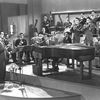
The Big Band Era (or Swing Era) was a pivotal period in American music from roughly 1935 to 1946.
Characterized by large jazz orchestras (typically 12–25 musicians) playing danceable, upbeat swing, it was the only time in U.S. history when jazz eclipsed all other musical genres in mainstream popularity.
Unlike earlier, smaller Dixieland bands, big bands required larger arrangements to fill massive ballrooms. They were typically divided into four core sections:
- Saxophones: Usually alto, tenor, and baritone saxes, often doubling on clarinet.
- Trumpets and Trombones: The brass sections that carried the main melodies and punchy, syncopated riffs.
- Rhythm Section: Piano, bass (or tuba), guitar, and drums, which provided the continuous, driving pulse of swing.
The era was defined by several legendary bandleaders whose unique styles shaped the genre:
- Benny Goodman: Dubbed the "King of Swing", his band's performance at the Palomar Ballroom in 1935 is often credited with kicking off the era.
- Duke Ellington: Known for his sophisticated, complex arrangements and long-running residencies at the Cotton Club.
- Count Basie: Famous for the driving, improvisational style born in Kansas City.
- Glenn Miller: Created the most commercially successful and pop-friendly sound of the era with hits like "In the Mood" and "Pennsylvania 6-5000".
The end of the era came quickly after World War II. The wartime economy, fuel shortages, and an entertainment tax severely impacted touring dance bands. Additionally, many musicians grew tired of the rigid arrangements and wanted to explore more improvisational, smaller-group sounds, giving rise to bebop and eventually rhythm and blues.
Published